On April 27, Professor Steven Goodman, and Professor Voahangy Soarimalala from the “China-Madagascar Joint Laboratory ”—a collaborative initiative between Oujiang Laboratory and the University of Antananarivo in Madagascar—visited Oujiang Laboratory. They delivered lectures at the “BaiChuan Forum,” presenting topics titled “Madagascar: Vertebrate Evolution and Geological History Giving Rise to One of the Most Biodiversity-Unique Places on Earth, with Special Emphasis on Mammals” and “The History of Human Colonization of Madagascar, Its People, Landscapes, and Unique Biodiversity.”
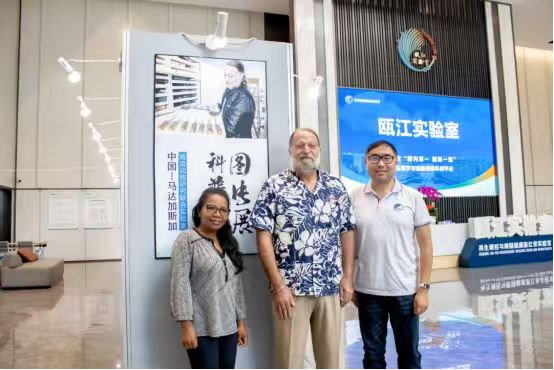
Drawing on four decades of field research, Professor Goodman systematically outlined Madagascar's tectonic history since its separation from the ancient continent of Gondwana. He emphasized how the region's unique geographic isolation provided an ideal “natural laboratory” for the evolution of terrestrial vertebrates. Subsequently, Professor Soarimalala provided a detailed historical and anthropological account of how humans overcame immense challenges to thrive on this remote island, shaping its distinctive culture and natural landscapes. He also conducted an in-depth analysis of Madagascar's current biodiversity conservation status and the scientific challenges it faces. Using iconic species like the Malagasy hedgehog, chameleon, and lemur as case studies, the professors vividly illustrated how adaptive radiation drives the differentiation of morphologically diverse, ecologically specialized species from a single ancestral lineage. Particularly noteworthy are the unique mammals found exclusively on the island, which have evolved remarkable diversity under the dual pressures of geographic isolation and ecological niche competition. They highlighted that Madagascar's unique species phenotypes hold exceptional value for biomedical research. Examples include the rapid skin regeneration ability of endemic lizard species and the unique hibernation mechanisms of lemurs, which hold significant implications for studies in organ regeneration, neuroscience, behavioral research, and phenotype development.