On July 15, the 68th session of the “BaiChuan Forum” was successfully held. This lecture featured a visiting presentation by Professor YU YE from Imperial College London, titled “Pathological Protein Aggregates in Neurodegenerative Disorders and Dementia.” The lecture was chaired by Yi Wang, Deputy Director of the Laboratory.
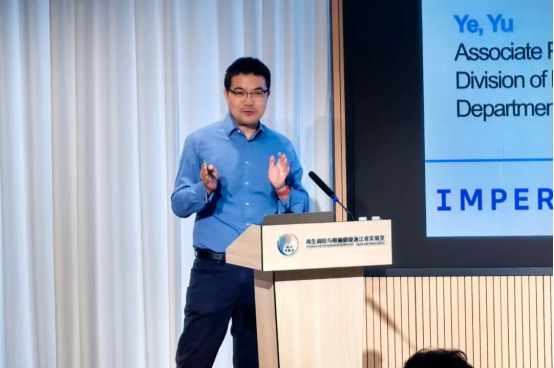
Professor YU YE systematically outlined the pivotal role of proteolytic enzymes in neurodegenerative diseases and their potential therapeutic applications. Through a series of experimental studies, his team discovered that proteolytic enzymes catalyze reactions that degrade insoluble large protein aggregates into soluble fragments, revealing the impact of these degradation products on cellular toxicity. The research further revealed significant differences in the function of proteolytic enzymes across different pathological stages: in the early stages of disease, their catalytic reactions help slow the pathological process; however, in the later stages, they may produce adverse effects.
Professor YU YE subsequently shared her team's latest findings. Utilizing techniques such as fluorescent labeling and super-resolution microscopy, the team successfully observed the dynamic changes of protein aggregates within cells and discovered that protein fragments smaller than 450 nanometers exhibit high cytotoxicity. Furthermore, the team employed deep learning methods to predict the relationship between protein conformation and toxicity, offering novel insights for future drug development.
The lecture featured substantive content, sparking lively discussions among attending researchers with Professor YU YE on topics including the impact of protein modifications on degradation processes and the tissue-specificity of proteolytic enzymes. The vibrant academic atmosphere not only deepened participants' understanding of neurodegenerative disease mechanisms but also provided crucial insights for developing therapeutic strategies. The lecture concluded successfully amid enthusiastic applause.
Dr. Ye, Associate Professor of Molecular Neuroscience at Imperial College London's Faculty of Medicine, holds a Bachelor's degree in Biochemistry and Biotechnology from Imperial College London and a PhD in Biochemistry, Biophysics, and Molecular Biology from the University of Cambridge. He completed advanced studies at Harvard Medical School. His honors include a Dementia Research Council Fellowship and a Sir Henry Wellcome Trust Research Fellowship.
Professor YU YE focuses on the mechanisms of neurodegenerative diseases. His team has uncovered novel mechanisms by which the ubiquitin-proteasome system regulates protein homeostasis: - Identified the N-terminal ubiquitination pathway as a key mechanism for clearing pathogenic oligomers in Alzheimer's and Parkinson's diseases; Developed an in vitro polyubiquitin chain synthesis system and patented fluorescently labeled diubiquitin substrate technology (Patent No.: WO2018123456); Pioneered quantitative super-resolution microscopy techniques, first demonstrating differential toxicity among protein aggregates and establishing an AI-based disease screening platform; Elucidated the direct correlation between aggregate structure and neurotoxicity. Research findings were published as first author in top-tier journals including Nature. This work deeply integrates biochemistry, biophysics, and microscopy techniques, providing crucial theoretical and technical support for disease mechanism research.