On March 27, Professor Andras Nagy, Fellow of the Royal Society of Canada and Foreign Member of the Hungarian Academy of Sciences, was invited to deliver a lecture at the Oujiang Laboratory's “BaiChuan Lecture Series.” His presentation, titled “Safe, Immune-Cloaked, Allogeneic Cell Transplants for Long-Term Delivery of Therapeutic Biologics in Disease Treatment,” shared cutting-edge research insights with scientists and graduate students. The lecture was chaired by Researcher JinYi Zhang.
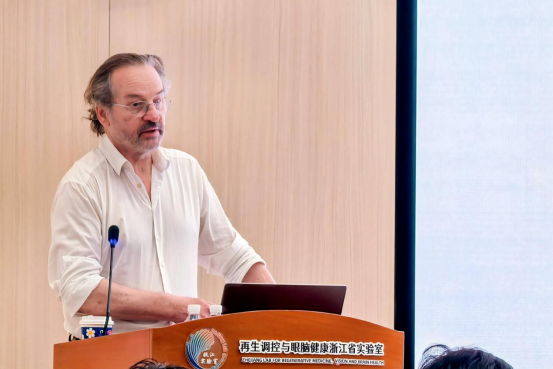
In his presentation, Academician Nagy focused on two core challenges in cell therapy—transplant safety and allogeneic cell rejection—systematically introducing his team's breakthrough technologies: FailSafe™ “life-death switch” technology and iACT stealth cell™ technology. The former precisely regulates genes essential for cell division and proliferation-dependent suicide mechanisms, eliminating all abnormally dividing transplanted cells to fundamentally mitigate the carcinogenic risks of stem cell therapy. The iACT stealth cell™ technology confers “immune invisibility” by expressing eight immunomodulatory genes in mouse embryonic stem cells, enabling long-term survival of allogeneic cells in mouse models and overcoming immune rejection barriers.
The integration of these two technologies offers a novel pathway for developing safe, universal cell therapy products. Currently demonstrating potential in treating diabetes, arthritis, Parkinson's disease, and blindness, this technology may extend to chronic pain management, aging delay, and immune regulation in the future, offering innovative solutions for intractable diseases.
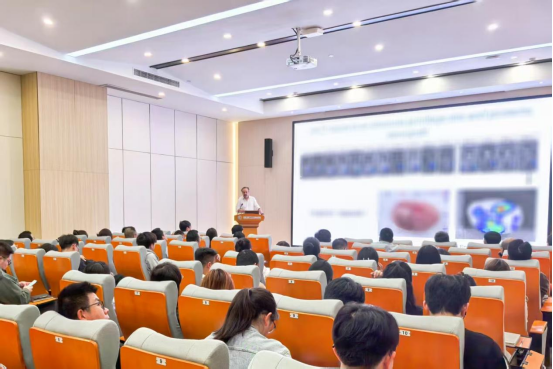
During the discussion session, attending researchers engaged in in-depth exchanges with Professor Nagy on specialized topics including clinical translation pathways for gene editing technologies and optimization of multi-gene co-expression systems.
Academician Andras Nagy is a Senior Scientist at the Lunenfeld-Tanenbaum Research Institute of the University of Toronto, a Fellow of the Royal Society of Canada, and a Foreign Member of the Hungarian Academy of Sciences. He has achieved remarkable accomplishments in stem cell biology and regenerative medicine. His team pioneered mouse and human embryonic stem cell lines, developed non-gene-editing iPS cell technology, and overcame major challenges in stem cell therapy safety and immune rejection. With nearly 300 publications in top journals including Nature, Science, and Cell, his work has propelled stem cell therapies toward clinical applications in diabetes, spinal cord injury, and degenerative diseases.