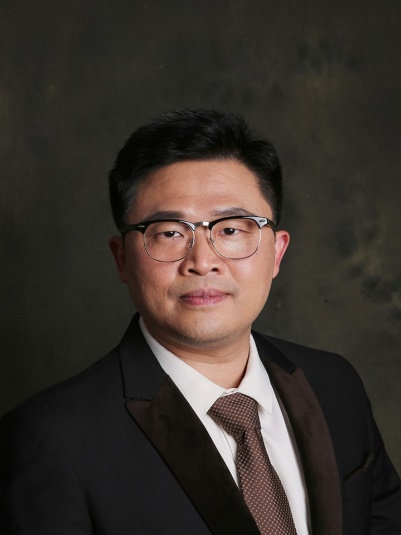
chen.gang@ojlab.ac.cn
September 1994 – July 1998
Bachelor’s Degree: Nanjing University, Major in Biology
September 1998 – July 2005
Doctoral Degree: Institute of Neuroscience, Chinese Academy of Sciences, Major in Neuroscience
June 2005 – February 2011
Research Associate, Vanderbilt University, Department of Psychology, USA
March 2011 – February 2014
Instructor, Vanderbilt University, Department of Radiology and Radiological Sciences, USA
March 2011 – February 2014
Faculty member, Vanderbilt University Institute of Imaging Science, USA
March 2014 – April 2016
Adjunct Instructor, Vanderbilt University, Department of Radiology and Radiological Sciences, USA
March 2014 – December 2023
Professor, Principle Investigator, Zhejiang University
October 2018 – May 2024
Professor, The Second Affiliated Hospital of Zhejiang University School of Medicine
June 2024 – present
Senior Research Professor, Zhejiang Lab for Regenerative Medicine, Vision and Brian Health
Senior Research Professor Gang Chen and his team have been dedicated to understanding the brain mechanisms of visual perception, as well as development of brain mechanisms inspired brain-machine interfaces for vision restoration. In 2015, Dr. Gang Chen was awarded the Zhejiang Provincial Natural Science Fund for Distinguished Young Scholars. He is now leading a major project on next generation of cortical visual prostheses granted by the national natural science foundation of China. He has published a number of papers in leading journals such as PNAS、Neuron、Science Advances, and holds 7 patents. Dr. Gang Chen has served as the grant reviewer for the Ministry of Science and Technology of China、the National Natural Science Foundation of China、the National Science Foundation of United States、the Medical Research Council of United Kingdom.
1. China’s Top 10 Medical Science and Technology News, 2020.
2. Lim Por-yen High-Tech Award (the second prize) , 2020.
3. Nomination for "Top 10 Advances of Science and Technology at Zhejiang University on 2017" , 2018.
4. Zhejiang Provincial Natural Science Funds for Distinguished Young Scientists, 2015.
5. Best employee of Qiushi Academy of Advanced Science, Zhejiang University, 2015.
6. Best employee of Qiushi Academy of Advanced Science, Zhejiang University, 2014.
1. Chen G, Lu H, Roe A. A map for horizontal disparity in monkey V2. Neuron. 2008, 58(3): 442-450.
2. Lu H, Chen G, Tanigawa H, Roe A. A motion direction map in macaque V2. Neuron. 2010, 68(5): 1002-13.
3. Xu G, Qian M, Tian F, Xu B, Friedman R, Wang J, Song X, Sun Y, Chernov M, Cayce J, Jansen E, Mahadevan-Jansen A, Zhang X*, Chen G*, Roe A*. Focal infrared neural stimulation with high-field functional MRI: A rapid way to map mesoscale brain connectomes. Science Advances. 2019 Apr 24;5(4):eaau7046. *Corresponding author.
4. Chen G*, Lu H, Tanigawa H, Roe A. Solving visual correspondence between the two eyes via domain-based population encoding in nonhuman primates. Proc Natl Acad Sci U S A. 2017,114(49): 13024-13029. *Corresponding author.
5. Yin H, Fu P, Lu H, Tanigawa H, Roe A, Chen G*. Functional architecture matters in the formation of perception. Proc Natl Acad Sci U S A. 2018,115(30):E6969-E6971. *Corresponding author.
6. Chernov M, Friedman R, Chen G, Stoner G, Roe A. Functionally specific optogenetic modulation in primate visual cortex. Proc Natl Acad Sci U S A. 2018,115(41):10505-10501.
7. Chernov M, Chen G, Roe A. Histological assessment of thermal damage in the brain following infrared neural stimulation. Brain Stimul. 2014, 7(3):476-82.
8. Chen G*, Wang F, Gore J, Roe A. Layer-specific BOLD activation in awake monkey V1 revealed by ultra-high spatial resolution functional magnetic resonance imaging. NeuroImage. 2013, 64(1): 147-155. *Corresponding author.