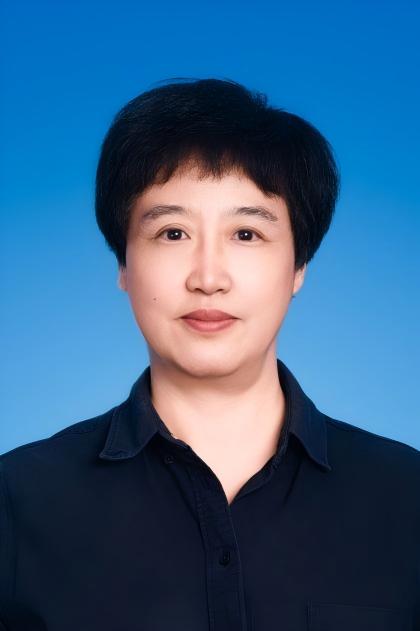
wuyili@wmu.edu.cn
2000-2003 Tianjin Medical University, Ph.D. in Internal Medicine
1998-2000 Tianjin Medical University, M.S. in Physiology
1989-1994 Tianjin Medical University, M.D., Bachelor of Clinical Medicine
2021-Present Principle Investigator/ Professor Oujiang laboratory; Institute of Aging, School of Mental Health, Wenzhou Medical University
2021-Present Vice Dean Institute of Aging/School of Mental Health, Wenzhou Medical University
2015-2021 Professor School of Mental Health, Jining Medical University
2012-2015 Research Associate Department of Psychiatry, Faculty of Medicine, The University of British Columbia, Vancouver, BC, Canada
2007-2012 Postdoctoral Fellow Department of Psychiatry, Faculty of Medicine, The University of British Columbia, Vancouver, BC, Canada
2004-2007 Postdoctoral Fellow Department of Biology, McMaster University, Hamilton, ON, Canada
2000-2004 Research Assistant Tianjin Medical University
1994-2000 Teaching Assistant Tianjin Medical University
Dr. Wu's research interests include the pathogenesis of Alzheimer's Disease, the mechanism of aging/brain aging, and the risk of depression and underlying mechanisms. Her recent research work mainly focuses on:
1. The therapeutic role of neuropeptides in Alzheimer's Disease and depression
2. The therapeutic role of probiotics/engineered probiotics. in Alzheimer's Disease and depression
1. Zhang Y, Chen H, Feng Y, Liu M, Lu Z, Hu B, Chen L, Zhang Y, Liu J, Cai F, Zhao Y, Pan W, Liao X, Pan S, Bestard-Lorigados I, Wu Y, Song W (2025) Activation of AMPK by GLP-1R agonists mitigates Alzheimer-related phenotypes in transgenic mice. Nat Aging 5, 1097-1113
2. Kang Y, Feng Z, Zhang Q, Liu M, Li Y, Yang H, Zheng L, Cheng C, Zhou W, Lou D, Li X, Chen L, Feng Y, Duan X, Duan J, Yu M, Yang S, Liu Y, Wang X, Deng B, Liu C, Yao X, Zhu C, Liang C, Zeng X, Ren S, Li Q, Zhong Y, Yan Y, Meng H, Zhong Z, Zhang Y, Kang J, Luan X, Pan S, Wu Y, Li T, Song W, Zhang Y. (2025). Identification of circulating risk biomarkers for cognitive decline in a large community-based population in Chongqing China. Alzheimers Dementia 21, e14443.
3. Shi Y, Huang D, Song C, Cao R, Wang Z, Wang D, Zhao L, Xu X, Lu C, Xiong F, Zhao H, Li S, Zhou Q, Luo S, Hu D, Zhang Y, Wang C, Shen Y, Su W, Wu Y, Schmitz K, Wei S, Song W (2024) Diphthamide deficiency promotes association of eEF2 with p53 to induce p21 expression and neural crest defects. Nat Commun 15, 3301.
4. Zhang Q, Xing M, Bao Z, Xu L, Bai Y, Chen W, Pan W, Cai F, Wang Q, Guo S, Zhang J, Wang Z, Wu Y, Zhang Y, Li JD, Song W (2024) Contactin-associated protein-like 2 (CNTNAP2) mutations impair the essential alpha-secretase cleavages, leading to autism-like phenotypes. Signal Transduct Target Ther. 9(1), 51
5. Liu X, Che R, Liang W, Zhang Y, Wu L, Han C, Lu H, Song W, Wu Y, Wang Z. Clusterin transduces alzheimer-risk signals to amyloidogenesis. Signal Transduct Target Ther. 2022;7:325.
6. Zhang S, Cai F, Wu Y, Bozorgmehr T, Wang Z, Zhang SI, Huang D, Guo J, Shen L, Rankin C. A presenilin-1 mutation causes alzheimer disease without affecting notch signaling. Mol Psychiatry 2020;25:603–13.
7. Ly P, Wu Y, Zou H, Wang R, Zhou W, Kinoshita A, Zhang M, Yang Y, Cai F, Woodgett J, Song W. Inhibition of GSK3β-mediated BACE1 expression reduces alzheimer-associated phenotypes. J Clin Invest 2013;123:224–35.
8. Wu Y, Xiao S, Zhu X-D. MRE11–RAD50–NBS1 and ATM function as co-mediators of TRF1 in telomere length control. Nat Struct Mol Biol 2007;14:832–40.