Email:py.wang@ojlab.ac.cn
Lab Website: https://www.x-mol.com/groups/pywang666
2006.09 - 2011.07 Chemical Engineering, National Taiwan University, PhD
2004.09 - 2006.07 Chemical Engineering, National Taiwan University, Master
2000.09 - 2004.07 Chemical Engineering, National Taipei University of Technology,
· 2022.3 – present Oujiang Laboratory; Key Laboratory of Alzheimer's Disease of Zhejiang, Institute of Aging, Wenzhou Medical University, Principal Investigator
· 2020.1 – 2022.3 Shenzhen Key Laboratory of Biomimetic Materials and Cellular Immunomodulation, Director
· 2018.8 – 2021.7 Shenzhen Institute of Advanced Technology (SIAT), Chinese Academy of Sciences (CAS), Principal Investigator
· 2015.6 – 2018.7 Department of Chemistry and Biotechnology, Swinburne University of Technology, Victoria, Australia, ARC DECRA Fellow
· 2012.6 - 2015.6 Department of Chemistry and Biotechnology, Swinburne University of Technology, Victoria, Australia, John Stocker Fellow
· 2011.07-2012.06 Department of Chemical Engineering, National Taiwan University, Postdoc
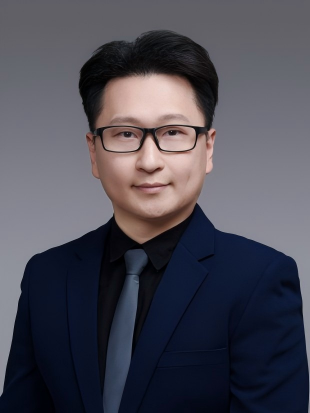
Dr. Peng-Yuan Wang is a Principal Investigator at the Oujiang Laboratory and the group leader of the Stem Cells and Mechanobiology team. He has received several prestigious awards, including the ARC DECRA Fellowship, the VESKI Fellowship, the Vice-Chancellor's Award from Swinburne University, the Representative of China-Australia Young Scientists (YSEP), the China Overseas High-level Talent Award, and the Zhejiang Overseas High-level Talent Award. He was a PI at Shenzhen Institute of Advanced Technology (SIAT), Chinese Academy of Sciences (CAS), and the Director of Shenzhen Key Laboratory of Biomimetic Materials and Cellular Immune Regulation.
Dr Wang has developed a variety of bioengineering tools to study the mechanotransduction and cell fate. The focus was on how the extracellular matrix (ECM) regulates cell behavior, transcriptome profile, and epigenetic state. The research has significant importance and potential applications in cell engineering and regenerative medicine, and its outcomes play a guiding role in designing new biomaterials and cell therapy approaches.
Dr Wang has published more than 110 SCI papers, with over 80 being the first/corresponding authors, including Adv Funct Mater (2), ACS Nano (2), Small (3), Mol Ther (2), ACS Appl Mater Inter (10), and Acta Biomater (5) with an H-index of 34, and one highly-cited paper (1% ESI). He has been granted 11 authorized invention patents as the first inventor.
After returning to China in 2018, Dr. Wang has successively presided over the National Key Research and Development Program, the National Natural Science Foundation of China General Project, the International Cooperation Project of the Chinese Academy of Sciences, the International Cooperation Project of Guangdong Province, the Key Project of Zhejiang Province, the Key Laboratory and International Cooperation Project of Shenzhen City, and the Innovation Team of Wenzhou City. His personal research funds have exceeded 30 million yuan.
Dr. Wang serves as an Associate Editor of European Cells and Materials, reviews Master's theses and Doctoral dissertations in China and Europe, and is a Member of the Royal Society of Chemistry (RSC).
Research Direction
(1) Stem Cells
(2) Materiobiology
(3) Mechanobiology
(4) Organoids
2023,浙江省海外高层次领军人才
2020,深圳市重点实验室主任
2018,深圳市孔雀人才
2018,深圳市南山区领航人
2017,中国海外高层次青年人才
2017,澳大利亚维多利亚州VESKI学者
2015,斯威本大学校长杰出研究学者奖
2015,澳大利亚技术科学与工程学院中澳青年代表
2015,澳大利亚DCERA Fellow
2013,亚洲生物材料学会优秀青年科学家
2013,澳大利亚生物材料学会交流学者
1. J Mei, HX Tian, XY Zhang, YS Chen, LY Wang, Z Zhang, YL Zhang, DC Rong, J Zeng, M Dong, Y Gao, JY Yin, HJ Wu, PY Wang*, W Zhang* “Heme oxygenase 1 (HO-1) is a drug target for reversing cisplatin resistance in non-small cell lung cancer” Journal of Advanced Research 2025 May 17:S2090-1232(25)00347-9 (IF = 13.0)
2. J Mei, XY Jiang, HX Tian, DC Rong, JN Song, L Wang, YS Chen, RCB Wong, CX Guo, LS Wang, LY Wang, PY Wang*, JY Yin* “Anoikis in cell fate, physiopathology, and therapeutic interventions” MedComm, 2024, 5 (10), e718 (IF = 10.7)
3. J Mei, XJ Liu, HX Tian, YX Chen, Y Cao, J Zeng, YC Liu, YP Chen, Y Gao, JY Yin, PY Wang* “Tumour organoids and assembloids: Patient-derived cancer avatars for immunotherapy” Clinical and Translational Medicine, 2024, 14:e1656. (IF = 10.6)
4. H Tian†, J Mei†, L Cao, J Song, D Rong, M Fang, Z Xu, J Chen, J Tang, H Xiao, Z Liu, PY Wang*, J Yin*, X Li* “Disruption of Iron Homeostasis to Induce Ferroptosis with Albumin-Encapsulated Pt(IV) Nanodrug for the Treatment of Non-Small Cell Lung Cancer” Small 2023, 19, 49, 2206688 (IF = 12.1)
5. Y Lin, F Zhang, S Chen, X Zhu, J Jiao, Y Zhang, Z Li, J Lin, B Ma, M Chen*, PY Wang*, C Cui* “Binary Colloidal Crystals Promote Cardiac Differentiation of Human Pluripotent Stem Cells via Nuclear Accumulation of SETDB1” ACS Nano 2023 Jan 19; 17, 3, 3181–3193 (IF = 16.0)
6. J Wang, F Lin, J Chen, L Zhu, Y Chuang, L Tu, C Ma, D Ling, AW Hewitt, C Tseng, MH Shah, BV Bui, P van Wijngaarden, GJ Dusting, PY Wang*, G Liu* “TAK1 blockade as a therapy for retinal neovascularization” Pharmacological Research 2023 Jan, 187, 106617 (IF = 10.5)
7. J Harati, K Liu, H Shahsavarani, P Du, M Galluzzi, K Deng, J Mei, H Chen, S Bonakdar, B Aflatoonian, G Hou, Y Zhu, H Pan, R CB Wong, M Ali Shokrgozar*, W Song, PY Wang* ”Defined Physicochemical Cues Steering Direct Neuronal Reprogramming on Colloidal Self-Assembled Patterns (cSAPs)” ACS Nano 2022 Dec 30; 17 (2), 1054–1067 (IF = 16.0)
8. FS Diba, N Reynolds, H Thissen, PY Wang*, P Kingshott* “Tunable Chemical and Topographic Patterns Based on Binary Colloidal Crystals (BCCs) to Modulate MG63 Cell Growth” Adv Funct Mater July 2019 1904262 (IF = 19.0)
9. FS Diba, A Boden, H Thissen, M Bhave, P Kingshott*, PY Wang* “Binary colloidal crystals (BCCs): Interactions, fabrication, and applications” Adv Colloid Interface Sci 2018 Nov;261:102-127. (IF = 19.3)