2007-2012: Shanghai Institute of Ceramics, Chinese Academy of Sciences, Doctoral Degree
2003-2007: Nanjing Tech University, College of Materials Science and Engineering, Undergraduate
2023.07-Present Researcher Oujiang Laboratory
2020.08-Present Professor Shanghai University, School of Life Sciences 2018.01-2020.07 Researcher Shanghai Institute of Ceramics, Chinese Academy of Sciences
2016.03-2017.12 Distinguished Researcher Shanghai Institute of Ceramics, Chinese Academy of Sciences
2015.09-2016.03 Associate Researcher Shanghai Institute of Ceramics, Chinese Academy of Sciences
2013.09-2015.09 Postdoctoral Fellow The University of Queensland, Australia
2012.07-2013.09 Assistant Researcher Shanghai Institute of Ceramics, Chinese Academy of Sciences
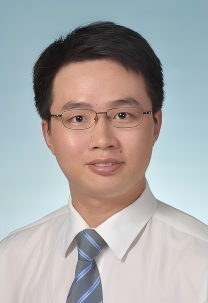
Professor Yu Chen's main research focuses on the controlled preparation and biological effects of biomedical micro/nano functional materials, as well as their applications in biomedicine—including areas such as neurological diseases, bone tissue engineering, osteoarthritis, inflammatory diseases, and gene therapy. He has developed a variety of novel preparation methods to obtain biomedical material systems with clinical application potential, and has also established multiple efficient disease treatment modalities (such as photodynamics, magnetothermal therapy, sonodynamics, catalytic medicine, immunotherapy, and synergistic therapy).As the first author or corresponding author, Yu Chen has published over 300 SCI-indexed papers, which have been cited more than 46,000 times with an H-index of 113. He has been consecutively listed as a "Highly Cited Researcher" for six years (2018–2023), and has also been included in Elsevier's "China Highly Cited Researchers" list as well as the list of "Top 2% Scientists Worldwide". He holds 15 authorized national invention patents and was named a "Pioneering Investigator" by the journal ChemCommun (a Nature Index journal) in 2023. A number of medical devices developed by him have obtained medical device registration and filing, and have entered the stage of clinical translation.
His research interest include:
1. Neurological Diseases: Explore the pathogenesis of brain disorders (such as Alzheimer’s disease, post-stroke brain injury, Parkinson’s disease, etc.), and develop targeted therapeutic strategies in combination with biomedical materials to promote neural repair and functional reconstruction.
2. Bone Tissue Engineering and Osteoarthritis: Investigate the mechanisms of bone tissue regeneration and repair, develop functional materials suitable for the treatment of bone defects and osteoarthritis (e.g., scaffolds, bioceramics, controlled release systems, etc.), and advance the translational application of regenerative medicine in clinical orthopedics.
3. Inflammation-Related Diseases: Focus on the regulatory mechanisms of chronic inflammation (such as inflammatory bowel disease, atherosclerosis, etc.), design intelligent responsive materials, and achieve precise drug delivery and targeted therapy in the inflammatory microenvironment.
2017 National "Ten Thousand Talents Program" for Young Top Talents (3rd Batch), Excellent Young Scientists Fund of the National Natural Science Foundation of China
2023 Shanghai Leading Talent
2020 Shanghai Shuguang Scholar
2018 Outstanding Young Science and Technology Innovation Talent of Shanghai Branch, Chinese Academy of Sciences
2017 Shanghai Outstanding Academic Leader
2016 Chief Scientist of the National Key R&D Program
2016 Youth May 4th Medal of Shanghai Science and Technology System
2015 Young Talent Support Program of the Chinese Chemical Society
2015 Shanghai Young Top Talent
2015 Shanghai Talent Development Fund
2015 Youth May 4th Medal of Shanghai Branch, Chinese Academy of Sciences
2014 Shanghai Natural Science First Prize
2014 Shanghai Young Science and Technology Star
2014 Lu Jiaxi Young Talent Award of the Chinese Academy of Sciences
2014 Outstanding Young Scientist of the Chinese Academy of Sciences
2012 Excellent Doctoral Dissertation of the Chinese Academy of Sciences
2012 President's Special Award of the Chinese Academy of Sciences
1. Zhang S, Kong X, Xu Xi, Hua Q, Xu W, Chen L*, Zhou J* and Chen Y*, Two-dimensional superlattice nanocatalysts unlock multimodal energy transformation-driven catalytic therapy, Nat. Commun. 2025,16, 5822.
2. Yue W, Chen L, Yu L, Zhou B, Yin H, Ren W, Liu C, Guo L, Zhang Y, Sun L, Zhang K*, Xu H*, Chen Y*. Checkpoint blockade and nanosonosensitizer-augmented noninvasive sonodynamic therapy combination reduces tumour growth and metastases in mice. Nat. Commun. 2019,10(1):2025.
3. Li K, Wang S, Chen C, Xia L, Huang H, Feng W*, Dai X*, Chen Y*, Endowing 1T′-ReS2 Nanosheets with sonopiezoelectric property by theoretical-guided vacancy-manipulated Peierls distortion for tumor ferroptosis therapy, J. Am. Chem. Soc. 2024, 146, 40, 27779-27793.
4. Haung H, Xiao Z, Feng W, Song X, Chen L, Huang L*, Ding L*, Chen Y*, Biomimetic nanoimmunotherapy boosts spatiotemporal PANoptosis and reshapes desmoplastic tumor microenvironment, Cell Reports Medicine, 2025, Accepted, In press.
5. Li G, Dai X, Liu Y, Chen J, Yu W, Li P*, Yu L*, Chen Y*, Alternating Interlayered Piezoelectric Self-Heterojunction Boosts Sono-Piezocatalytic Pyroptosis Oncotherapy, Adv. Mater., 2025, DOI: 10.1002/adma.202508941.
6. Wang Z, Wang X, Dai X, Xu T*, Qian X*, Chang M*, Chen Y*. 2D Catalytic Nanozyme Enables Cascade Enzyodynamic Effect-Boosted and Ca2+ Overload-Induced Synergistic Ferroptosis/Apoptosis in Tumor.Adv Mater. 2024 Jun;36(24):e2312316.
7. Zhang M, Sun D, Huang H*, Yang D, Song X, Feng W, Jing X*, Chen Y*. Nanosonosensitizer Optimization for Enhanced Sonodynamic Disease Treatment.Adv Mater. 2024 Nov;36(46):e2409663.
8. Xiaoting Wang , Xun Guo , Hongze Ren* , Xinran Song*, Liang Chen* , Luodan Yu , Jianli Ren , Yu Chen. An "Outer Piezoelectric and Inner Epigenetic" Logic-Gated PANoptosis for Osteosarcoma Sono-Immunotherapy and Bone Regeneration. Adv Mater.2025 Feb;37(7):e2415814.