hzf@wmu.edu.cn
2006.9-2010.4 Nanjing University of Science and Technology, Biochemical Engineering, Ph.D.
2002.9-2005.7 Jinan University, Pharmacology, M.S.
1998.9-2002.7 China Pharmaceutical University, Pharmaceutical Analysis, B.S.
2024.12-present Director of the Provincial Key Laboratory of New Drug Development for Metabolic Diseases
2024.10-present Academic Vice President of Anhui Medical University
2023.12-present Director of the Joint Center for Pharmaceutical Science and Technology Platform, Wenzhou Medical University
2023.2-present Deputy Director of the National Key Laboratory for Macromolecular Drugs and Large-scale Preparation
2022.10-present Deputy Director of the National Engineering Research Center for Cell Growth Factor Drugs and Protein Preparations
2021.1-2023.12 Vice-dean of School of Pharmaceatical Science, Wenzhou Medical University
2014.5-present Professor, School of Pharmaceatical Science, Wenzhou Medical University
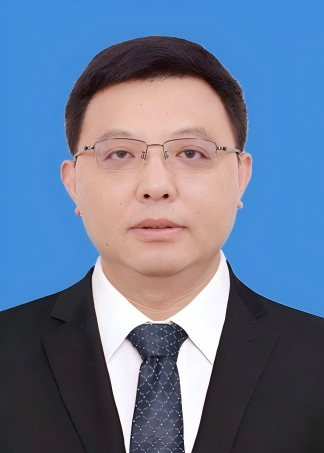
Prof. Huang and his team have been dedicated to innovative research on growth factors and metabolic diseases. As corresponding or first author, has published over 50 research articles in prestigious journals including Cell Metabolism (2), Molecular Cell, PNAS (2), Hepatology (3), and Nature Communications (3). Holds 8 authorized invention patents as the primary inventor (3 of which have been commercialized). Received the Zhejiang Provincial Natural Science First Prize (2021) as the leading contributor, and contributed as a key participant to national-level awards including the National Natural Science Second Prize (2024), National Science and Technology Progress Second Prize (2018), and National Technology Invention Second Prize (2009). Has led major national-level projects, including Key Program, Major Research Program, and Integrated Project funded by the National Natural Science Foundation of China, as well as key provincial projects such as Major Projects and Key Research and Development Programs supported by the Natural Science Foundation of Zhejiang Province.Spearheaded the development of two Class I new drug candidates (FGF1-21 chimera and FGF4 allosteric modulator), both successfully transferred for commercialization, and participated in the development of two FGF-based formulations that obtained clinical approval. Committed to excellence in education, awarded the National (Postgraduate) Teaching Achievement Second Prize (2022) as the primary contributor, and recognized as a core member of the National Huang Danian-style Teacher Team (2021).
Research Interests: Microbial & Biochemical Pharmaceuticals & Pharmacology
1. Discovery of novel therapeutic targets for metabolic diseases based on growth factor signaling pathways.
2. Structure-based design and molecular engineering of growth factor therapeutics.
2022 Distinguished Professor of the "ChangJiang Scholars" Program of the Ministry of Education
2018 Young top-notch talents of the National Special Support Program
2022Young and Middle-aged Expert with Outstanding Contributions of Zhejiang Province
2018 Young Top-notch Talents of Zhejiang Provincial Special Support Program
2020 Innovative talent of Jiangsu Provincial Double Innovation Plan
2021 High-Level Leading Talent of Jiangsu "333" Project
2021 High-Level Innovative Health Talent of Zhejiang Province
2020 Leading Talent of Zhejiang Higher Education Institutions
1) Lintao Song#,*, Yushu Hou#, Da Xu#, Xijia Dai, Jianya Luo, Yi Liu, Zhuobing Huang, Miaomiao Yang, Jie Chen, Yue Hu, Chuchu Chen, Yuli Tang, Zhiheng Rao, Jianjia Ma, Minghua Zheng, Keqing Shi, Chao Cai, Mingqin Lu, Ruqi Tang, Xiong Ma, Cen Xie, Yongde Luo, Xiaokun Li*, Zhifeng Huang*(Corresponding author). Hepatic FXR-FGF4 is required for bile acid homeostasis via an FGFR4-LRH-1 signal node under cholestatic stress. Cell Metabolism, 2025, 37(1):104-120.
2) Hongbin Sun#, Wei Lin#, Yu Tang#, Hongqing Tu#, Ting Chen, Jie Zhou, Dezhong Wang, Qingqing Xu, Jianlou Niu, Wenliya Dong, Sidan Liu, Xinyan Ni, Wen Yang, Yingzheng Zhao, Lei Ying, Jie Zhang, Xiaokun Li, Moosa Mohammadi, Wei L. Shen*, Zhifeng Huang*(Corresponding author). Sustained remission of type 2 diabetes in rodents by centrally administered fibroblast growth factor 4. Cell Metabolism, 2023, 35(6):1022-1037.
3) Lintao Song#, Luyao Wang#, Yushu Hou#, Jie Zhou, Chuchu Chen, Xianxi Ye, Wenliya Dong, Huan Gao, Yi Liu, Guanting Qiao, Tongtong Pan, Qiong Chen, Yu Cao, Fengjiao Hu, Zhiheng Rao, Yajing Chen, Yu Han, Minghua Zheng, Yongde Luo, Xiaokun Li*, Yongping Chen*, Zhifeng Huang*(Corresponding author). FGF4 protects the liver from nonalcoholic fatty liver disease by activating the AMP-activated protein kinase-Caspase 6 signal axis. Hepatology, 2022, 76(4):1105-1120.
4) Lei Ying#, Luyao Wang#, Kaiwen Guo#, Yushu Hou#, Na Li, Shuyi Wang, Xingfeng Liu, Qijin Zhao, Jie Zhou, Longwei Zhao, Jianlou Niu, Chuchu Chen, Lintao Song, Shaocong Hou, Lijuan Kong, Xiaokun Li, Jun Ren*, Pingping Li*, Moosa Mohammadi*, Zhifeng Huang*(Corresponding author). Paracrine FGFs target skeletal muscle to exert potent anti-hyperglycemic effects. Nature Communications, 2021, 12(1):7256.
5) Jianlou Niu#, Jing Zhao#, Jiamin Wu#, Guanting Qiao, Junlian Gu, Chuanren Zhou, Qi Li, Lei Ying, Dezhong Wang, Huan Lin, Xiaokun Li, Moosa Mohammadi*, Zhifeng Huang*(Corresponding author). Curtailing FGF19's mitogenicity by suppressing its receptor dimerization ability. Proc Natl Acad Sci U S A, 2020, 117(46):29025-29034.
6) Luyao Wang#, Wenliya Dong#, Lei Fan#, Hongru Kong#, Siyu Liang, Zhuobing Huang, Jie Chen, Sisi Zhi, Siyan Xu, Qiaoling Qiu, Miaomiao Yang, Yushu Hou, Yue Hu, Tongtong Pan, Minghua Zheng, Xiaokun Li*, Zhifeng Huang*(Corresponding author), Lintao Song*. Repression of the ERRγ-CYP2E1 pathway by fibroblast growth factor 4 mitigates alcoholic liver injury. Hepatology, 2025, doi: 10.1097/HEP.0000000000001282.
7) Qian Lin#, Sudan Zhang#, Jiaren Zhang#, Yi Jin#, Taoli Chen, Ruoyu Lin, Jiaxuan Lv, Wenjing Xu, Tianzhen Wu, Shenyu Tian, Lei Ying, Xiaokun Li, Zhifeng Huang*(Corresponding author), Jianlou Niu*. Colonic epithelial-derived FGF1 drives intestinal stem cell commitment toward goblet cells to suppress inflammatory bowel disease. Nature Communications, 2025, 16(1):3264.
8) Dezhong Wang#, Yuan Yin#, Shuyi Wang#, Tianyang Zhao#, Fanghua Gong, Yushuo Zhao, Beibei Wang, Yuli Huang, Zizhao Cheng, Guanghui Zhu, Zengshou Wang, Yang Wang, Jun Ren, Guang Liang*, Xiaokun Li*, Zhifeng Huang*(Corresponding author). FGF1ΔHBS prevents diabetic cardiomyopathy by maintaining mitochondrial homeostasis and reducing oxidative stress via AMPK/Nur77 suppression. Signal Transduct Target Ther, 2021, 6(1):133