Huangchuanshu@hotmail.com
1979-1984 The Fourth Military Medical University, Xi’an, China, M.D. , Medicine
1987-1990 The Fourth Military Medical University, Xi’an, China, M.S. , Microbiol & Immunol.
1991-1994 The Fourth Military Medical University, Xi’an, China, Ph.D , Immunol.
2021-Present Senior PI, Ouyang Laboratory (Full Time); Distinguished Professor, Wenzhou Medical University
2011-2021 Adjunct Professor (China National Thousand Talents Program Expert), Wenzhou Medical University
2009-2011 Adjunct Professor, Wenzhou Medical University
2007-2019 Professor (with Tenure), New York University; Deputy Director of Nelson Institute of Environmental Medicine, New York University School of Medicine; Vice-Chairman, Department of Environmental Medicine, New York University School of Medicine
2004-2006 Associate Professor (with Tenure), New York University
2000-2004 Assistant Professor (with Tenure Track), New York University
1999-2000 National Research Council Senior Research Scientist, National Institute for Occupational Safety and health, Morgantown, WV, USA
1998-1999 Research Associate, ScientistHormel Institute, University of Minnesota, Austin, MN,USA
1995-1998 Postdoctoral Fellow, Hormel Institute, University of Minnesota, Austin, MN, USA
1994-1995 Lecture & Section Leader,Section of Neuroimmunology, The Institute of Neuroscience, The Fourth Military Medical University, Xi’an, China
1986-1994 Teacher Assistant & Lecture, Department of Immunology, The Fourth Military Medical University, Xi’an, China
1984-1986 Teacher Assistant, Department of Microbiology and Immunology, The Fourth Military Medical University, Xi’an, China
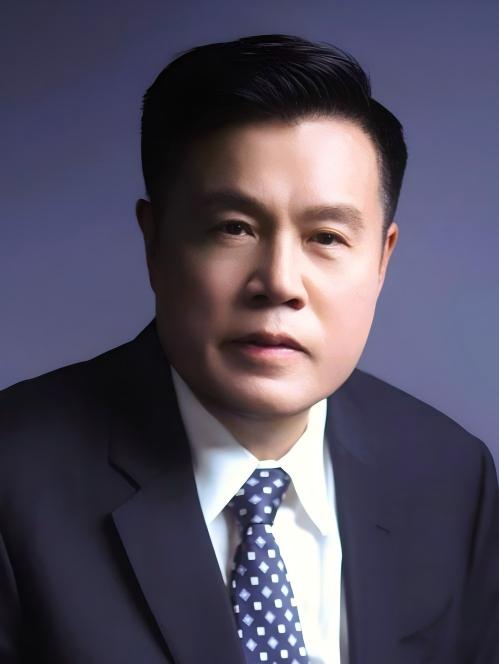
Dr. Huang’s Research Focus: environmental carcinogenesis, tumor immune
microenvironment, tumor invasion/metastasis, and the development of precision anti-tumor innovative drugs. He has published over 340 SCI-indexed papers, with total citations over 27,000 and an H-index of 68.
His Major Research Achievements:
1. Pioneered the discovery of a critical role of PI-3K in tumorigenesis, which establishes PI-3K as a therapeutic target for a new anti-cancer drug development;
2. Discoverer of the biological functions of p50 protein. The identification of novel
functions of p50 revealed the molecular mechanism behind the dual role of arsenicals in carcinogenesis and cancer therapy;
3. Elucidated the novel function of the RING domain of XIAP protein. This discovery challenged existing misconceptions about XIAP role in tumor development and progression. Based on this precise target, Dr. Huang developed a First-in-class small-molecule drug targeting E3 ligase of XIAP for regulation of anti-tumor immunity and the immune microenvironment.
2023-2025 listed for multiple years in the World’s Top 2% Scientists sourced from Elsevier and Stanford University
2011 Selection for“China National Thousand Talents Program (TTP)”, China
2000 National Research Council (NRC) Research Award at the CDC/NIOSH
1999 Oak Ridge Institute for Science and Education (ORISE) appointment award to the Research Participation Program at the Centers for Disease Control and Prevention (CDC), NIOSH
1. Tengda Li, Maowen Huang , Ning Sun, Xiaohui Hua, Ruifan Chen, Qipeng Xie, Shirui Huang, Mengxiang Du, Yazhen Zhao, Qianqian Lin, Jiheng Xu, Xiaoyun Han, Yunping Zhao, Zhongxian Tian, Yu Zhang, Wei Chen*, Xian Shen*, Chuanshu Huang*. Tumorigenesis of basal muscle invasive bladder cancer was mediated by PTEN protein degradation resulting from SNHG1 upregulation. J Exp Clin Cancer Res. 2024 Feb 17;43(1):50.
2. Junlan Zhu, Zhongxian Tian, Yang Li, Xiaohui Hua, Dongyun Zhang, Jingxia Li, Honglei Jin, Jiheng Xu, Wei Chen, Beifang Niu, Xue-Ru Wu, Sergio Comincini, Haishan Huang*, Chuanshu Huang*. ATG7 Promotes Bladder Cancer Invasion via Autophagy-Mediated Increased ARHGDIB mRNA Stability. Adv Sci. 2019 Feb 22;6(8):1801927.
3. Minggang Peng, Jingjing Wang, Zhongxian Tian, Dongyun Zhang, Honglei Jin, Claire Liu, Jiawei Xu, Jingxia Li, Xiaohui Hua, Jiheng Xu, Chao Huang, Chuanshu Huang*. Autophagy-Mediated miR-6981 Degradation Exhibits p27 Promotion of PHLPP1 Protein Translation. Autophagy. 2019 Sep;15(9):1523-1538.
4. Chao Huang, Xingruo Zeng, Guosong Jiang, Xin Liao, Claire Liu, Jingxia Li, Honglei Jin, Junlan Zhu, Hong Sun, Xue-Ru Wu, Chuanshu Huang*. XIAP BIR domain suppresses miR-200a expression and subsequently promotes EGFR protein translation and anchorage-independent growth of bladder cancer cell. J Hematol Oncol. 2017 Jan 5;10(1):6.
5. Haishan Huang, Junlan Zhu, Yang Li, Liping Zhang, Jiayan Gu, Qipeng Xie, Honglei Jin, Xun Che, Jingxia Li, Chao Huang, Lung-Chi Chen, Jianxin Lyu, Jimin Gao*, Chuanshu Huang*. SQSTM1/p62 Upregulation in vitro and in vivo by Nickel Contributes to Its Cell Malignant Transformation of Human Bronchial Epithelial Cells. Autophagy. 2016 Oct 2;12(10):1687-1703.
6. Haishan Huang, Xiaofu Pan, Honglei Jin, Yang Li, Lin Zhang, Caili Yang, Pei Liu, Ya Liu, Lili Chen, Jingxia Li, Junlan Zhu, Xingruo Zeng, Kai Fu, Guorong Chen*, Jimin Gao*, Chuanshu Huang*. PHLPP2 Downregulation Contributes to Lung Carcinogenesis Following B[a]P/B[a]PDE Exposure. Clin Cancer Res. 2015 Aug 15;21(16):3783-93.
7. Lun Song, Jingxia Li, Dongyun Zhang, Zheng-Gang Liu, Jianping Ye, Qimin Zhan, Han-Ming Shen, Matt Whiteman, Chuanshu Huang*. IKK Programs to Turn on the GADD45α/MKK4/JNKs Apoptotic Cascade Specifically via p50 NF-κB in Arsenite Response. J Cell Biol. 2006 Nov 20;175(4):607-17.
8. Chuanshu Huang, Wei-Ya Ma, Matthew R Young, Nancy Colburn, Zigang Dong. Shortage of mitogen-activated protein kinase is responsible for resistance to AP-1 transactivation and transformation in mouse JB6 cells. Proc Natl Acad Sci U S A. 1998 Jan 6;95(1):156-61.
9. Chuanshu Huang, Wei-Ya Ma, Clarence A Ryan, Zigang Dong. Proteinase inhibitors I and II from potatoes specifically block UV-induced activator protein-1 activation through a pathway that is independent of extracellular signal-regulated kinases, c-Jun N-terminal kinases, and P38 kinase. Proc Natl Acad Sci U S A. 1997 Oct 28;94(22):11957-62.