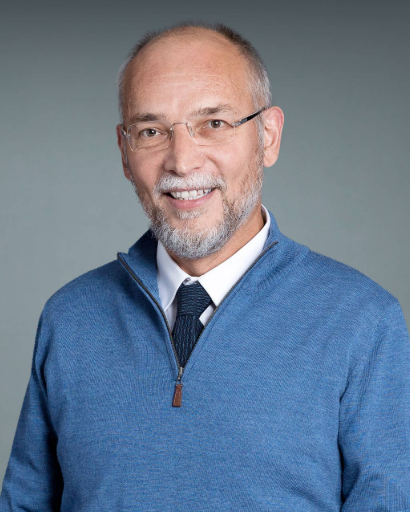
moosa.mohammadi @ojlab.ac.cn
1983.09-1988.06 University of Zurich Bachelor,Master's
1989.09-1993.07 University of Zurich Doctor's
1993.09-1997.09 Postdoctoral New York University Medical Center
1997.09-2001.09 assistant professor New York University Medical Center
2001.09-2007.09 Tenured Associate Professor New York University Medical Center
2007.09-2021.09 Tenured professor New York University Medical Center
2022.07- -present Professor Oujiang Laborator
Professor Moosa successfully analyzed the structures of nearly two-thirds of the members of the FGF family, providing insights into the structure of relevant protein-receptor complexes. These structures greatly enrich and deepen our understanding of this type of functional protein, promoting the FGF family to become one of the most deeply researched branches in the field of protein drugs, and facilitating the development of related therapeutic drugs, making outstanding contributions to the international development of growth factors and structural biology. Professor Moosa has authored important reviews on FGF signaling mechanisms and drug development, with over 10,000 citations and an H-index of 85; he has led nearly 10 research projects, including those represented by the NIH R01 grant in the United States, with research on FGF signaling mechanisms funded by NIH R01 for 25 years, and he is a senior reviewer for NIH..
Professor Moosa has long focused on the research of the structure, molecular signaling, and functions of fibroblast growth factors (FGF).
Professor Moosa is recognized worldwide as one of the most authoritative experts in the field. For nearly thirty years, Professor Moosa has successfully deciphered the structures of nearly two-thirds of the 22 members of the FGF family, obtaining the structures of the relevant protein and receptor complexes. These structures have greatly enriched and deepened people's understanding of such functional proteins, propelling the FGF family to become one of the most researched branches in the field of protein drugs and facilitating the development of related therapeutic drugs, making an outstanding contribution to the international advancement of growth factors and structural biology. Professor Moosa has published over 150 papers as corresponding or first author in internationally prestigious academic journals such as Nature, Science, and Cell, including 3 papers in Nature, 3 in Cell, and 1 in Science. Additionally, he has been repeatedly invited to write important reviews on FGF signaling mechanisms and drug development for Nature Reviews Drug Discovery and Nature Reviews Molecular Cell Biology, with his papers cited over 10,000 times and an H-index of 85. Professor Moosa has led nearly 10 research projects, represented by the NIH R01 grant from the U.S., and has received NIH funding for his research on FGF signaling mechanisms for 25 years, serving as a senior reviewer for the NIH. As a first inventor, Professor Moosa has obtained over twenty U.S. invention patents, and the internationally first FGFR kinase small molecule inhibitor Sutent, which he developed, was licensed to Pfizer for $170 million, and its sales have now exceeded $5 billion. Furthermore, the new structural models reported in many of his papers and patents have become the direct theoretical basis for many companies to conduct related drug development. Professor Moosa is the global chair of the FGF division of the International Gordon Conference, and the four monographs he has published in the field of growth factors have become reference materials for doctoral students in universities across the United States, leading to over 100 invited academic presentations worldwide.
(1) Lingfeng Chen , Lili Fu , Jingchuan Sun , Zhiqiang Huang , Mingzhen Fang , Allen Zinkle6 , Xin Liu , Junliang Lu , Zixiang Pan , Yang Wang , Guang Liang , Xiaokun Li, Gaozhi Chen & Moosa Mohammadi 'Structural basis for FGF hormone signalling' Nature,6 September 2022 ,https://doi.org/10.1038/s41586-023-06155-9
(2) Gaozhi Chen, Yang Liu, Regina Goetz, Lili Fu, Seetharaman Jayaraman, MingChang Hu, Orson W. Moe, Guang Liang, Xiaokun Li , and Moosa Mohammadi 'α-Klotho is a non-enzymatic molecular scaffold for FGF23 hormone signalling' Nature. 2018 January 25; 553(7689): 461–466. doi:10.1038/nature25451
(3) Lingfeng Chen, William M. Marsiglia, Huaibin Chen, Joseph Katigbak, Hediye Erdjument-Bromage, David J. Kemble, Lili Fu, Jinghong Ma, Gongqin Sun, Yingkai Zhang, Guang Liang, Thomas A. Neubert, Xiaokun Li, Nathaniel J. Traaseth , Moosa Mohammadi 'Molecular basis for receptor tyrosine kinase A-loop tyrosine transphosphorylation' Nat Chem Biol. 2020 March ; 16(3): 267–277. doi:10.1038/s41589-019-0455-7.
(4) Alexander N. Plotnikov, Joseph Schlessinger, Stevan R. Hubbard, and Moosa Mohammadi 'Structural Basis for FGF Receptor Dimerization and Activation' Cell, Vol. 98, 641–650, September 3, 1999,
(5) Alexander N. Plotnikov, Stevan R. Hubbard, Joseph Schlessinger, and Moosa Mohammadi 'Crystal Structures of Two FGF-FGFR Complexes Reveal the Determinants of Ligand-Receptor Specificity' Cell, Vol. 101, 413–424, May 12, 2000,