fang.liu@camh.ca
Postdoctoral fellow | 1999-2000
Department of Neuroscience, Center for Addiction and Mental Health, Toronto
Ph. D. | 1996-1999
Institute of Medical Science, University of Toronto, Toronto
M.Sc. | 1994-1996
Institute of Medical Science, University of Toronto, Toronto
Resident | 1987-1992
Department of Pediatrics, Shandong Medical University,Shandong, China
Bachelor of Medicine | 1981-1987
Clinical Medicine, Shanghai Medical University (Current: Fudan University), Shanghai, China
Director |2021-present
Institute of Mental Health and drug discovery, Oujiang Laboratory
Senior Principal Investigator|2021-present
Wenzhou Medical University
Senior Scientist | 2006-2021
Head, Lab of Molecular Neuroscience, Center for Addiction and Mental Health
Professor | 2011-2021
Dept. of Psychiatry, Physiology, Institute of Medical Science, University of Toronto
Director | 2018-2021
Division of Neuroscience and Clinical Translation, Dept. of Psychiatry, University of Toronto
Associated Professor | 2005-2011
Dept. of Psychiatry, Physiology, Institute of Medical Science, University of Toronto
Assistant Professor | 2001-2005
Dept. of Psychiatry, Physiology, Institute of Medical Science, University of Toronto
Research Scientist | 2000-2006
Department of Neuroscience, Center for Addiction and Mental Health
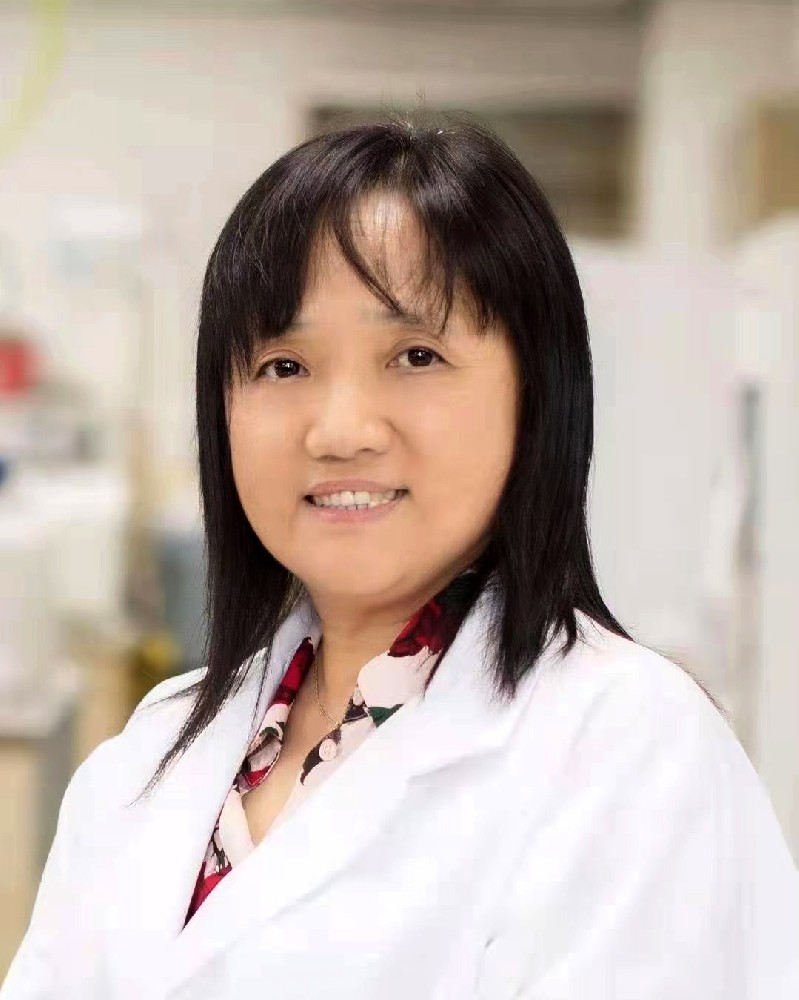
Prof. Liu has dedicated her research to the study of psychiatric disorders through basic, clinical, and translational approaches, resulting in numerous pioneering and original findings in areas such as pathogenesis, biomarkers, drug development, and treatment. Her contributions to the field are evidenced by nearly 100 publications in esteemed journals such as Nature, Cell, Neuron, and Nature Medicine, as well as the acquisition of 8 international patents.
The direction of the research:
(1)Research on the pathogenesis of schizophrenia, depression and other mental diseases.
(2) Screening of novel biomarkers for mental illness.
(3) Research and development of interfering peptides and small molecule compounds with therapeutic effects on mental illness.
(4)Treatment and mechanism of neurological diseases, such as stroke and Parkinson’s disease.
(5)The identification of new lead compounds within natural medications and the investigation of potential drug candidates.
2020-2025 | Tapscott Chair in Schizophrenia Studies |
2019 | Fellow of Canadian Academy of Health Science |
2016 | Association for the study of Neurons and Diseases Investigator Award |
2008 | Ontario Research Commercialization Program Award |
2008-2013 | The Heart and Stroke career investigator award (declined in 2009) |
2007 | Honorable mention of Daniel X. Freedman Award (NARSAD) |
2006 | Early Research Award, Ontario, Canada |
2005 | Honorable mention of Daniel X. Freedman Award (NARSAD) |
2005-2007 | NARSAD Independent Investigator Award |
2004 | American College of Neuropsychopharmacology/European College of Neuropsychopharmacology Exchange Award |
2003 | American College of Neuropsychopharmacology/Bristol-Myers Squibb travel Award |
2003-2008 | The Heart and Stroke McDonald Scholarship |
2002-2004 | Canadian psychiatric research foundation Award |
2001-2005 | NARSAD young investigator award |
1999-2001 | Canadian psychiatric research foundation post-doctoral fellowship |
1998-1999 | Cleghorn Fellowship for Schizophrenia Studies |
1. Principal Investigator of the National Natural Science Foundation of China (NSFC) General Program: "Study on SAP-Mediated Regulation of SERT Function in SSRI Treatment Efficacy for Major Depressive Disorder," Project No.: 82250710177, Duration: January 2022 – December 2024.
2. The Role and Mechanism of CSMD2 in the mPFC Brain Region Mediating Microglial Synaptic Remodeling in the Regulation of Fear Extinction Memory Retrieval, Project No.: MS25H090017, Duration: January 2025 – December 2026.
3. Principal Investigator of NSFC General Program: "Study on the mechanism of mitochondrial function regulation by AMPA receptor-associated protein complex in Parkinson's disease," Project No.: 82401669, Duration: January 2025 – December 2027.
4. Principal Investigator of NSFC General Program: "The Role and Mechanism of Liver-derived SAP in Depressive Disorders in Mice," Project No.: 82501840, Duration: January 2026 – December 2028.
1) Gong WK, Li X, Wang L, Yang Q, Tiran-Cappello A, Liang Z, Samsom J, Liu Q, Lin H, Baunez C, Liu F, Yuan TF. Prefrontal FGF1 Signaling is Required for Accumbal Deep Brain Stimulation Treatment of Addiction. Adv Sci (Weinh). 2025 Apr;12(16):e2413370. doi: 10.1002/advs.202413370. Epub 2025 Feb 27.
2) Zhai D, Yan S, Samsom J, Wang L, Su P, Jiang A, Zhang H, Jia Z, Wallach I, Heifets A, Zanato C, Tseng CC, Wong AHC, Greig IR, Liu F. Small-molecule targeting AMPA-mediated excitotoxicity has therapeutic effects in mouse models for multiple sclerosis. Sci Adv. 2023 Dec 8;9(49):eadj6187. doi: 10.1126/sciadv.adj6187.
3) Li Y, Su P, Chen Y, Nie J, Yuan TF, Wong AH, Liu F. The Eph receptor A4 plays a role in demyelination and depression-related behavior. J Clin Invest. 2022 Apr 15;132(8):e152187. doi: 10.1172/JCI152187.
4) Li H, Su P, Lai TK, Jiang A, Liu J, Zhai D, Campbell CT, Lee FH, Yong W, Pasricha S, Li S, Wong AH, Ressler KJ, Liu F. The glucocorticoid receptor-FKBP51 complex contributes to fear conditioning and posttraumatic stress disorder. J Clin Invest. 2020 Feb 3;130(2):877-889. doi: 10.1172/JCI130363.
5) Wang Y, Chen Y, Chen H, Samsom JN, Shu M, Gao X, Li Q, Chen K, Wang L, Liu F. Exposure to "Forever Chemical" perfluorooctanoic acid induces depression-like behaviors in mice by activating the HPA axis. Environ Int. 2025 Aug;202:109631. doi: 10.1016/j.envint.2025.109631. Epub 2025 Jun 23.
6) Su P, Yan S, Chen K, Huang L, Wang L, Lee FHF, Zhou H, Lai TKY, Jiang A, Samsom J, Wong AHC, Yang G, Liu F. EF1α-associated protein complexes affect dendritic spine plasticity by regulating microglial phagocytosis in Fmr1 knock-out mice. Mol Psychiatry. 2024 Jan 11. doi: 10.1038/s41380-023-02396-2.
7) Su P, Yan S, Yang J, Tong J, Samsom J, You F, Li Y, Chen Q, Jiang A, Zhai D, Chen J, Sun Z, Zhou J, Liu M, Lee FJS, Xu ZD, Wang X, Vasdev N, Wong AHC, Liu F. Serum amyloid P component (SAP) modulates antidepressant effects through promoting membrane insertion of the serotonin transporter. Neuropsychopharmacology. 2022 Sep 8. doi: 10.1038/s41386-022-01449-4.
8) Liang HY, Zhao ZB, Liu Z, Samsom J, Chen KH, Chen Y, Chen LL, Cai CY, Liu F. nNOS-expressing neurons in the mPFC mediate depression-related behaviors in mice through pPVT-mPFC projections. Neuropsychopharmacology. 2025 Sep;50(10):1583-1594. doi: 10.1038/s41386-025-02163-7.